


Rockwool is usually the more cost-effective and better-performing option for noise reduction, while spray foam is more expensive but offers added benefits like air sealing and thermal insulation.
On average, Rockwool soundproofing costs $1.50–$3.50 per square foot installed, whereas spray foam insulation ranges from $2.50–$5.00 per square foot, depending on whether open-cell or closed-cell foam is used.
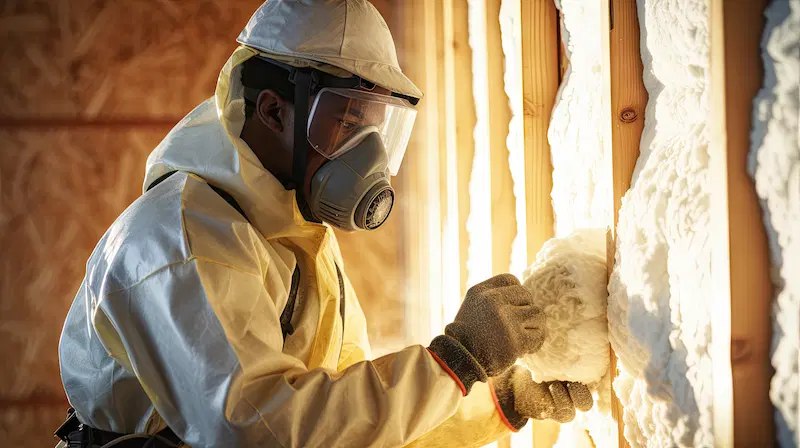
If your goal is to reduce noise between rooms or from outside, Rockwool typically delivers stronger sound absorption at a lower price. If you also need air sealing, moisture resistance, and energy efficiency, spray foam may justify its higher cost.
The right choice depends on your budget, the type of noise you’re dealing with, and whether soundproofing alone, or soundproofing plus insulation is your priority.
Who Needs Soundproofing Insulation?
Soundproofing insulation is not just for recording studios or apartment buildings. If unwanted noise is affecting your comfort, sleep, focus, or privacy, soundproofing can make a noticeable difference.
Below are the most common situations where soundproofing insulation like spray foam or Rockwool is especially advantageous.
1. Homeowners Dealing With Outside Noise
If you live near busy roads, highways, airports, railways, or construction zones, outside noise can easily penetrate walls, ceilings, and floors. Soundproofing insulation helps reduce airborne noise such as traffic, sirens, and neighborhood activity, making indoor spaces quieter and more livable.
Best option: Spray foam for air sealing + rockwool for sound absorption.
2. Multi-Family Homes, Apartments, and Condos
In apartments, townhomes, and condos, noise often travels through shared walls, floors, and ceilings. Common issues include hearing neighbors talk, TVs, footsteps, or plumbing noise. Soundproofing insulation helps limit noise transfer and improves privacy between units.
Best option: Rockwool insulation in interior walls and ceilings due to its high density and sound absorption.
3. Home Offices and Remote Workers
With more people working from home, noise from family members, pets, or outdoor activity can seriously affect productivity. Soundproofing insulation helps create a quieter, more focused environment for video calls, meetings, and deep work.
Best option: Rockwool for interior walls; spray foam if outside noise or air leaks are also a problem.
4. Bedrooms and Nurseries
Light sleepers, shift workers, and parents with young children often benefit greatly from soundproofing. Noise from other rooms, neighbors, or the street can disrupt sleep patterns and overall well-being. Soundproofing insulation reduces sound transfer and creates a more peaceful sleeping environment.
Best option: Rockwool insulation paired with proper wall sealing.
5. Home Theatres, Media Rooms, and Gaming Rooms
Loud audio systems, gaming setups, and movie rooms can disturb the rest of the house or neighbors. Soundproofing insulation helps contain noise inside the room, improving sound quality while keeping other spaces quiet.
Best option: Rockwool for sound absorption; spray foam for sealing gaps and preventing sound leaks.
6. Music Rooms and Practice Spaces
Musicians, podcasters, and content creators need soundproofing to prevent sound from escaping—and to improve acoustics inside the room. Insulation reduces echo, vibration, and sound transmission through walls and ceilings.
Best option: Rockwool due to its superior acoustic performance, often combined with additional acoustic treatments.
7. Homes with HVAC, Plumbing, or Mechanical Noise
Mechanical systems like furnaces, air handlers, water pipes, and laundry rooms can produce constant background noise. Soundproofing insulation helps dampen vibrations and reduce noise transfer into living spaces.
Best option: Rockwool around mechanical rooms; spray foam to seal gaps and penetrations.
8. Property Owners and Landlords
Soundproofing can increase tenant satisfaction, rental value, and long-term occupancy. Reducing noise complaints is especially important in rental properties and short-term rentals where comfort and privacy are major selling points.
Best option: Rockwool for interior sound control; spray foam for exterior walls and noise-prone areas.
Our insulation partners will be happy to provide your options based on your space, needs, and budget. Just fill out the short online form on this page and receive FREE QUOTES to compare.
Which Is Cheaper and More Effective?
Cost is often the deciding factor when choosing soundproofing insulation, and the price difference between Spray foam and Rockwool can be significant.
While both materials reduce noise, they do so in very different ways, and at very different price points. Spray foam typically costs more because it requires professional installation and specialized equipment, whereas Rockwool is generally more affordable and easier to install.
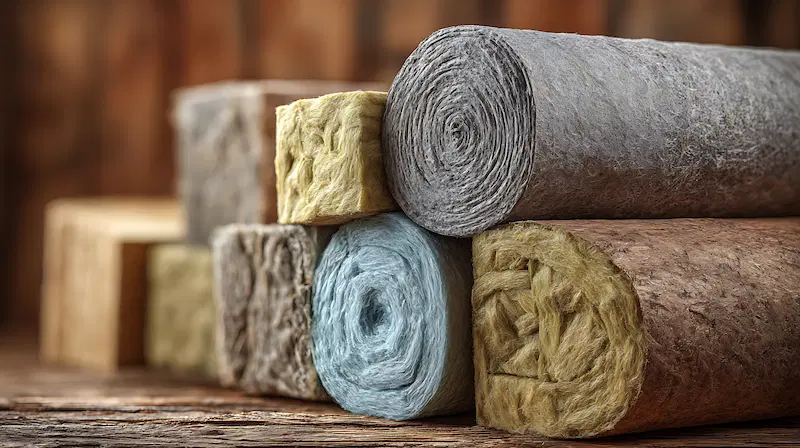
Understanding which option is cheaper is not just about the material price alone. Installation method, wall type, labor costs, and whether you are soundproofing interior or exterior spaces all play a role in the final cost.
In the sections below, we will break down how spray foam and Rockwool compare in terms of material costs, installation expenses, and overall value for soundproofing.
Spray Foam Insulation
- Cost: $1.50–$3.50 per square foot for open-cell spray foam; $3–$5 per square foot for closed-cell spray foam (materials and installation).
- Soundproofing Effectiveness: Moderate to high, especially for blocking airborne noise, though less effective than Rockwool for mid-to-high frequency sound.
- Pros: Seals gaps and cracks, provides thermal insulation, and resists moisture.
- Cons: More expensive upfront, requires professional installation, and is not ideal for walls with irregular cavities without prep.
Rockwool Insulation
- Cost: $0.90–$2.50 per square foot for materials; $1.50–$3.50 per square foot including professional installation.
- Soundproofing Effectiveness: Very high, especially at absorbing sound and reducing echo. Ideal for home theaters, bedrooms, and studios.
- Pros: Excellent sound absorption, fire-resistant, moisture-resistant, easy to cut and install in wall cavities.
- Cons: Does not seal gaps as spray foam does; may require additional layers or barriers for full soundproofing.
The bottom line is that for sheer soundproofing, Rockwool is usually the better choice. For combined thermal insulation and air sealing, spray foam works well, but costs more.
Would you like to get an accurate quote for your space? Request free quotes from top insulation contractors near you by filling out the short online form below.
Sample Prices Based on Square Footage per Type of Soundproofing
Pricing for soundproofing insulation varies based on material type, installation complexity, room layout, and whether you are going DIY or professional. Below is a breakdown of typical market prices per square foot for the most common soundproofing insulation options, including spray foam and Rockwool, so you can estimate costs more accurately.
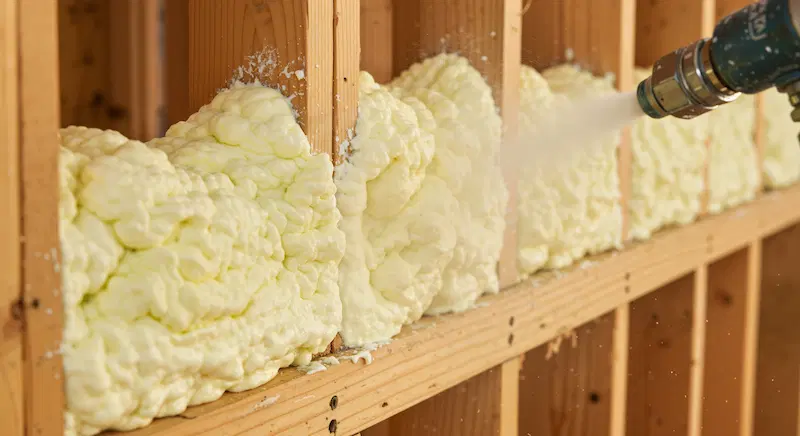
Soundproofing Price Guide (Per Square Foot)
| Insulation Type | Cost of Materials | Cost of Installation | Average Cost (Installed) | Features |
| Rockwool | $0.90-$2.50 | $1.50-$3.50 | $2.40-$6.00 | Excellent sound absorption; DIY work possible |
| Open Cell Spray Foam | $1.50-$3.00 | $1.50-$2.50 | $3.00-$5.50 | Good air sealing and moderate soundproofing |
| Closed-cell spray foam | $3.00 – $5.00 | $2.00-$3.50 | $5.00-$8.50 | Better moisture resistance but higher cost |
| Fibreglass Batt | $0.50-$1.50 | $1.00-$2.00 | $1.50-$3.50 | Cheapest price, moderate performance |
| Acoustic Panels (add-on) | $2.00-$5.00 | DIY and professional | $2.00-$5.00 | Supplemental soundproofing |
| Mass-loaded vinyl (barrier) | $1.80-$3.50 | $1.50-$2.50 | $3.30-$6.00 | For heavy soundproofing, used with insulation |
Note: These are average price ranges; actual costs may vary by region, contractor rates, wall accessibility, and project specifics.
What do these Prices Mean?
Rockwool: Best Cost-to-Noise Reduction Ratio
Rockwool typically offers the best balance of price and soundproofing performance:
- Great for bedrooms, studios, home theaters, and shared walls
- Dense fibres absorb sound instead of just blocking it
- Low irritation if handled with basic safety gear
Installed cost estimate: $2.40–$6.00 per square foot
The price and benefits make Rockwool one of the most cost-effective soundproofing insulation materials.
Spray Foam Insulation – Higher Cost, Added Benefits
Although spray foam is more expensive, it effectively seals air leaks and improves thermal performance, which can significantly increase overall home comfort beyond just soundproofing.
Open-cell spray foam:
- Softer, less dense
- Better for filling gaps and drafts
- Moderate noise reduction
Installed cost: $3.00–$5.50 per sq ft
Closed-cell spray foam:
- Rigid, dense structure
- Slightly better at blocking sound than open-cell
- Adds moisture resistance
Installed cost: $5.00–$8.50 per sq ft
Spray foam is particularly effective for exterior walls or attic spaces as it seals air leaks and improves insulation performance.
Other Options to Consider
Fiberglass (Acoustic Batts): The cheapest option but not as effective as Rockwool. Best used in budget builds or secondary spaces where soundproofing is moderate.
Mass-Loaded Vinyl (MLV): It is not insulation by itself but is often paired with Rockwool to block sound through walls and ceilings. Adds around $3–$6 per sq. ft. installed.
Acoustic Panels: Best as a complement to other insulation if internal room acoustics (echo/clarity) are a focus.
Example Total Costs by Room Size
| Room Size | Rockwool (Installed) | Open-Cell Spray Foam Installed | Closed-Cell Spray Foam Installed |
| 100 square feet | $240-$600 | $300-$550 | $500-$850 |
| 250 square feet | $600-$1,500 | $750-$1,500 | $1,250-$2,200 |
| 500 square feet | $1,200-$3,000 | $1,500-$2,800 | $2,500-$4,200 |
These estimates may vary but they can help you budget before calling contractors and decide whether professional installs or DIY makes sense.
Example Total Costs by Room Size
Certain factors are taken into account when contractors provide their actual price.
- Accessibility – Hard-to-reach walls and ceilings can increase labour costs.
- Existing Structures – Retrofits may require drywall removal or additional framing.
- Climate & Region – Labour and material prices vary across cities and countries.
- DIY vs Professional – DIY Rockwool can cut labour costs but may take longer; spray foam requires professional installation.
- Noise Goals – Higher STC targets often require more layers or added barriers like MLV.
Ready to Soundproof Your Home? Get Free Quotes Today
Choosing the right soundproofing insulation can make a huge difference in your comfort, privacy, and overall home value.
Rockwool offers excellent sound absorption at a moderate cost, while spray foam adds the benefits of air sealing and energy efficiency, though at a higher price. Some homeowners even combine both for maximum noise reduction and insulation performance.
No matter your budget or project size, the first step is getting accurate pricing from trusted local contractors.

Comparing quotes ensures you find the best deal and the right solution for your home, whether you are finishing a bedroom, building a home theatre, or sealing exterior walls against outside noise.
Get free quotes tailored to your project today to find the best price for soundproofing insulation from reputable contractors near you!