

Insulation is one of the most important factors affecting comfort, energy efficiency, and heating costs in Alberta.
With long winters, extreme cold snaps, and rising utility prices, the right insulation helps keep heat inside, reduce drafts, and prevent energy loss year after year.
Whether you’re building new or upgrading an older home, your insulation choice directly impacts monthly bills and long-term value.
In Alberta’s climate, spray foam insulation typically delivers a higher return on investment than fibreglass, even though it costs more upfront. Spray foam’s superior air sealing and higher effective R-value reduce heat loss more effectively, leading to lower energy bills and stronger long-term savings. Fibreglass insulation is more affordable initially and still widely used, but its lower performance usually results in smaller lifetime savings.
You can compare insulation options by getting local quotes to quickly find which solution makes the most financial sense for your home. Fill out the form on this page and get FREE QUOTES with NO COMMITMENT!
Insulation Quality: Why Does it Matter in Alberta?
Homes in Alberta face conditions that insulation in milder climates rarely see. Temperatures can stay below freezing for months, while strong winds and dry air increase heat loss through even the smallest gaps. In these conditions, insulation is not only about slowing heat transfer. Rather, it is also about controlling air movement.

Many homes lose more heat through air leakage than through poorly insulated walls alone. That’s why two insulation types with similar R-values can perform very differently once installed. Understanding this difference is key when comparing spray foam and fibreglass insulation.
Learn more about spray foam vs. fibreglass insulation to determine the right choice for your needs and budget.
Spray Foam Insulation: The Benefits and Costs
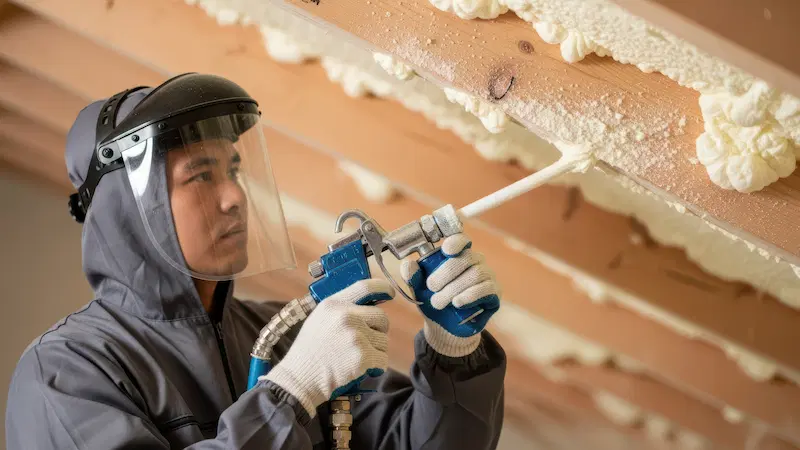
Spray foam insulation is a high-performance insulation material that expands on contact, sealing gaps, cracks, and cavities as it hardens. Unlike traditional insulation, spray foam acts as both an insulator and an air barrier, which makes it especially effective in Alberta’s cold and windy climate.

Types of Spray Foam Used in Alberta Homes
Open-cell spray foam
Open-cell spray foam is lighter and more flexible, and boasts an R-value of approximately R-3.5 to R-4 per inch. It is typically used for interior walls, soundproofing, or areas where moisture resistance is less critical.
Closed-cell spray foam
Closed-cell spray foam is denser and more rigid, offering an R-value of roughly R-6 to R-7 per inch. It also functions as an air barrier and moisture barrier, making it a popular choice for basements, rim joists, exterior walls, and other areas exposed to Alberta’s extreme temperatures.
Key Benefits of Spray Foam Insulation
Spray foam’s biggest advantage is its ability to create a continuous, airtight seal. This significantly reduces heat loss caused by air leakage, which is one of the main sources of energy waste in Alberta homes.

Additional benefits include:
- Higher effective R-value per inch compared to fibreglass
- Reduced drafts and more consistent indoor temperatures
- Strong resistance to moisture and condensation
- Improved indoor comfort and quieter living spaces
- Long service life with minimal performance degradation
These advantages often translate into noticeably lower energy bills, particularly in older or drafty homes.
Cost Considerations of Spray Foam Insulation
The main disadvantage of spray foam insulation is its higher upfront cost. In Alberta, professionally installed spray foam typically costs 2 to 4 times more than fibreglass insulation, depending on the type used and the area being insulated.
Because spray foam must be installed by trained professionals using specialized equipment, the labour costs are higher than traditional insulation methods. However, this higher initial investment is often offset over time through energy savings, reduced maintenance, and improved durability.
For homeowners planning to stay in their home for many years, spray foam insulation often provides better overall value, despite its higher installation cost.

Disadvantages of Spray Foam Insulation
While spray foam insulation offers excellent energy performance, it is not the best choice for every home or budget. Understanding its potential drawbacks is important before making a decision, especially in Alberta, where insulation projects can represent a significant investment.
Higher Upfront Cost
The most noticeable disadvantage of spray foam insulation is its cost. For larger homes or whole-home projects, this higher upfront expense can be a deterrent, even if long-term energy savings are expected.
Professional Installation Required
Spray foam must be installed by trained professionals using specialized equipment. Unlike fibreglass batts or blown-in insulation, it is not suitable for DIY installation. Poor application can result in uneven coverage, improper curing, or reduced performance, making contractor selection especially important.
Installation Disruption
During installation, occupants may need to vacate the home or the insulated area for some time. Spray foam releases fumes while curing, and proper ventilation is required. This can be inconvenient, particularly for whole-house or attic projects.
Limited Flexibility after Installation
Once spray foam hardens, it is difficult to remove or modify. Future renovations, electrical changes, or plumbing work can be more complicated and costly compared to homes insulated with fibreglass, which is easier to move or replace.
Spray foam insulation delivers the best return on investment over time. Homeowners who plan to sell their home in the short term may not fully recoup the higher installation cost through energy savings alone.
In some parts of a home, such as some types of attics or interior walls, spray foam may give diminishing returns compared to cheaper insulation options. In such cases, fibreglass or a hybrid insulation approach may provide better value.
Consult our insulation partners by filling out the short online form on this page to receive offers tailored to your needs.
What is Fibreglass Insulation?
Fibreglass insulation is one of the most common insulation materials in Alberta. It comes in batts, rolls, or blown-in form and works by trapping air within the fibres to slow heat transfer.

Common Fibreglass Applications
- Attics (blown-in or batts)
- Interior wall cavities
- Budget-friendly renovations and retrofits
Advantages of Fibreglass
- Lower initial cost
- Widely available and familiar to contractors
- DIY-friendly in some applications
- Adequate thermal performance when properly installed
Limitations of Fibreglass
- Does not stop air movement on its own
- Loses effectiveness when compressed or poorly installed
- Can absorb moisture, reducing R-value
- May settle over time, especially blown-in insulation
What is Fibreglass Insulation?
While prices vary by city, contractor, and project scope, average costs in Alberta fall under the following ranges:
Spray Foam Insulation Costs
- Closed-cell spray foam: approximately $3.50–$7.00 per sq. ft. installed
- Open-cell spray foam: generally lower, but still higher than fibreglass
- Whole-home or large attic projects can reach $15,000–$30,000+ , depending on size

Fibreglass Insulation Costs
Fibreglass batts or blown-in insulation typically range from $1.25–$3.00 per sq. ft. installed. Attic upgrades are typically the most affordable fibreglass projects
Spray foam usually costs 2 to 4 times more than fibreglass at installation. This is often the biggest deciding factor for homeowners — but it’s only part of the equation.
Energy Efficiency: Where the Real Difference Appears
Energy efficiency isn’t just about R–value. In Alberta’s cold and windy climate, air leakage plays a major role in heat loss. Even well-insulated homes can lose significant heat through small gaps around framing, outlets, and joints.

Fibreglass insulation is effective at slowing heat transfer, but it does not prevent air movement by itself. Issues such as gaps, compression, or settling can diminish its performance. In contrast, spray foam insulation expands to seal cracks and cavities, acting as both insulation and an air barrier. This helps prevent drafts and keeps indoor temperatures more stable.
Because of this airtight seal, spray foam often delivers a higher effective R-value and better energy performance than fibreglass once installed. Alberta homeowners commonly see heating and cooling savings of 20–40% with spray foam, compared to 10–20% with fibreglass, depending on installation quality and existing air sealing.
Typical Energy Savings from Good Insulation
Spray foam insulation:
- Often reduces heating and cooling costs by 20–40% in Alberta homes
- Particularly effective in older or drafty houses
Fibreglass insulation:
- Commonly reduces energy costs by 10–20%
- Savings depend heavily on air sealing done separately
- Over time, these differences compound — especially with rising natural gas and electricity prices
Return on Investment (ROI) from Insulation Explained
ROI is where spray foam often pulls ahead in Alberta.

Spray Foam ROI
- Higher upfront cost, but larger annual energy savings
- Payback periods often range from 3 years to 7 years in cold climates
- Continues delivering savings for decades
- Adds value through comfort, durability, and moisture protection
Fibreglass ROI
- Faster payback on the initial investment
- Lower total lifetime savings
- May require topping up or replacement over time
- Less impact on overall home airtightness
Fibreglass can make sense for short-term budgets, but spray foam typically delivers greater total savings and stronger long-term value.
To get a clear idea of the cost of your insulation project, request FREE QUOTES by filling out the short online form on this page.
Which Insulation Is Best for Your Home?
The best insulation choice depends on more than just the price. Your home’s age, layout, comfort issues, budget, and how long you plan to stay all play a role. Understanding where each insulation type performs best can help you choose the option that delivers the most value for your specific needs.

Fibreglass may be a good choice for you If:
- Budget is the top priority
- You’re upgrading a single area, like an attic
- Your home already has good air sealing
- You plan to move within a few years
Spray Foam could be the better choice for you if:
- You want maximum energy savings
- You plan to stay in your home long-term
- Your home has noticeable drafts or uneven temperatures
- You want better moisture protection and durability